A practical guide to displaying, framing, handling, and storing your photographs and fine art prints.
You've invested time, care, and craft into your photographs. Protecting that investment doesn't require a museum budget; it requires understanding a few key principles and making smart choices about how you display, frame, handle, and store your prints. Whether you're a hobbyist enjoying your first framed photo or a seasoned photographer archiving years of work, these guidelines will help your prints look their best for years to come.
For those who want maximum longevity, one of the best strategies is to make two copies: one for display, and one stored in a dark, climate-controlled environment such as an archival album or box. But for most people, the goal is to enjoy their prints, and that's exactly what they're made for. The steps below help you do both.
The Three Enemies of Every Print
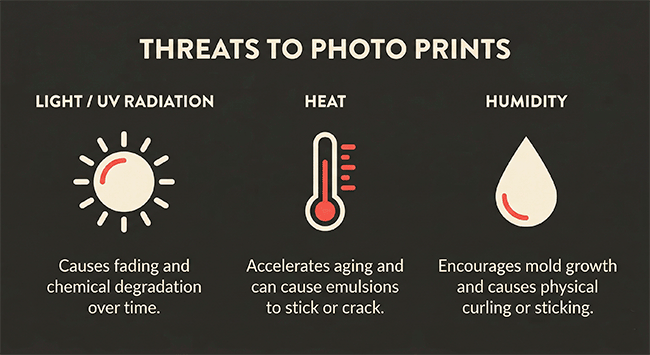
Every print will eventually fade. The only question is how quickly. Three factors drive deterioration more than any others:
- Light, especially ultraviolet (UV) radiation
- Heat
- Humidity
Understanding these threats is the foundation of good print care.
Light: Your Print’s Biggest Threat
UV light is the primary cause of premature fading. Direct sunlight is the worst offender. A print exposed to direct sun can begin showing visible fading within just a few months. Ever notice how dimly lit museums tend to be? That's intentional. Curators know that controlling light exposure is the single most effective way to slow deterioration.
Two light sources that often catch people off guard:
- Direct sunlight through windows, even indirect or filtered sunlight, adds up over time
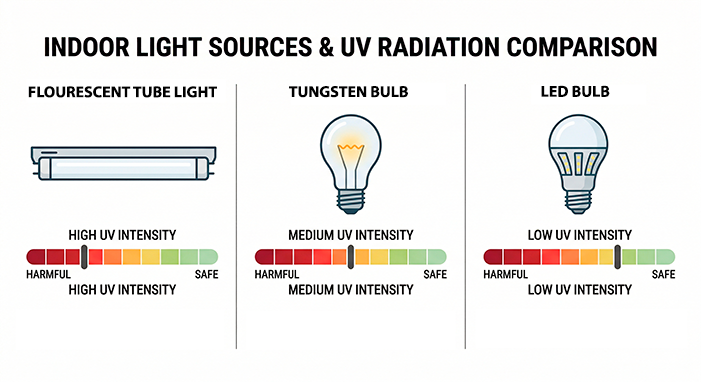
- Fluorescent lighting, which is nearly as damaging as sunlight when it comes to UV exposure
For illuminating displayed prints indoors, LED and tungsten lighting are significantly gentler alternatives and are the preferred choice for photographers and galleries alike.
If your display space has a lot of natural light, consider closing drapes or blinds during peak daylight hours, or positioning prints away from direct sightlines to windows.
Framing: Your First Line of Defense
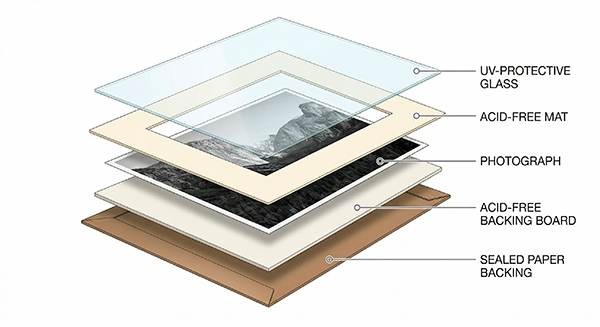
Framing a print behind glass or acrylic is one of the most effective things you can do to protect it from dust, humidity, and airborne pollutants. But not all framing is equal.
UV-Protective Glass and Acrylic
Plain glass or acrylic provides some physical protection but offers little UV protection. If budget allows, Tru-Vue Museum Glass is the gold standard, offering exceptional UV filtering, dramatically reducing glare, and being nearly invisible in the frame. It is expensive, but worth considering for your most important pieces. Between plain and museum-grade glass, there are many mid-range UV-filtering options that offer solid protection at a more accessible price point.
Always Use a Mat
Never let a print touch the glass directly. A mat creates a critical air gap between the print surface and the glass, preventing moisture from becoming trapped and damaging the print over time. Always use acid-free matboard, which won't off-gas chemicals that degrade your print.
Back and Seal the Frame
Back the frame with acid-free board and seal the back panel with a sheet of paper. This limits exposure to light, humidity, and airborne gases, all of which degrade prints over time. Humidity is especially damaging in warmer, more humid climates, where even a well-framed print can suffer without a proper sealed backing.
Consider a Protective Lacquer Coating
Many professional print labs offer protective lacquer coatings that include UV inhibitors. These coatings seal the print surface against ozone and other environmental pollutants, adding a meaningful layer of protection, especially for prints that will be on long-term display. It’s worth requesting any print you plan to frame and keep.
Handling Your Prints with Care
The natural oils in your hands can transfer to a print’s surface and cause long-term damage, even if it isn’t immediately visible. A few simple habits make a real difference:
- Handle prints by their edges whenever possible
- Wash and dry your hands thoroughly before handling, or wear clean cotton gloves for added protection
- Avoid touching the print surface directly, even briefly
These habits matter most during framing, matting, or any time a print is unprotected.
Storing Prints You’re Not Displaying
For prints going into storage, the right materials and environment make a significant difference:
- Use a high-quality archival album or acid-free storage box
- Separate individual prints with sheets of acid-free paper or plain copy paper to prevent sticking and surface damage
- Store in a cool, dry, dark location away from attics, basements, or anywhere prone to temperature swings or humidity
At the extreme end of archival preservation, some collectors store prints in climate-controlled, airtight environments. For most people, a quality album in a stable environment is more than sufficient.
The Bottom Line
Protecting your prints doesn’t have to be complicated. A few consistent habits - keeping prints away from direct light, framing behind UV-protective glass with a mat, handling them carefully, and storing them thoughtfully - can dramatically extend their life while letting you enjoy them every day.
At Red River Paper, we’re passionate about helping photographers get the most from their prints, from the paper you print on to the way you care for your work over time. Have questions about print longevity, paper selection, or framing options? We’re here to help.
Red River Paper - Helping photographers create and preserve beautiful prints since 1997.
Related Posts and Information
Last updated: April 08, 2026


