Few materials in the history of photography have had as long and distinguished a run as baryta, a word that rolls off the tongue with an almost scientific gravity, yet represents something surprisingly elemental: a thin, luminous coat of white mineral that has been making photographs more beautiful for well over a century. Known in some parts of the world as "barite" and derived from the Greek word barys, meaning heavy, baryta is simply barium sulfate, a naturally occurring mineral with an extraordinary talent for whiteness. Its journey from geological curiosity to photographic essential is a story worth telling.
The earliest written description of baryta-coated paper dates to 1826. It was eventually patented in Paris in 1881, and widespread commercial manufacture didn't take hold until the mid-1880s, when machine coating made the process practical at scale. Meanwhile, across Europe, innovators were experimenting with baryta as a base for light-sensitive emulsions. Martinez-Sanchez and J. Laurant are credited with developing baryta paper in 1866 in Madrid, specifically as a substrate for photographic emulsions. The first baryta-coated photographic paper introduced in Germany dates to 1884, and from there the material spread rapidly through the professional and commercial photography world. Sharlothallmuseum
So why barium sulfate? The answer comes down to physics and chemistry working in harmony. The baryta layer is an opaque, reflective coating of barium sulfate, also known as blanc-fixe, French for "permanent white," suspended in a gelatin binder and applied to a paper base before the light-sensitive emulsion is added. Thicker baryta layers give the print a flat, uniform surface, while thinner layers retain the texture of the underlying paper. Crucially, barium sulfate is chemically inert, meaning it won't react with the silver halide emulsion above it or the paper fibers below. It functions as a smooth, chemically stable coating that covers paper fibers and brightens the highlights of a print. Think of it as the ideal canvas: pure, stable, and brilliantly white without any tricks or shortcuts. MoMA Sharlothallmuseum
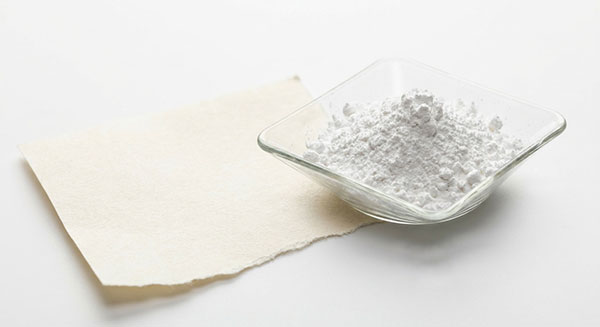
That whiteness matters enormously in photography. A photographic print is really a dance between the darkest shadows and the brightest highlights, and the quality of your whites sets the ceiling for everything above them. Raw paper fiber, even high-quality cotton or alpha-cellulose, has a slightly warm, off-white tone that can muddy highlights and reduce the perceived contrast of an image. Barium sulfate is highly reflective of both visible and ultraviolet light, and the baryta coating limits the penetration of emulsion into the paper's fibers, making the emulsion layer more even and resulting in more uniform image quality. The result is a print that seems to glow from within, with highlights that are genuinely bright, shadows that are genuinely deep, and a tonal range that rewards careful examination. Wikipedia
Both printing and developing papers were manufactured with baryta layers starting in the 1880s. Throughout the late 19th century and the entire 20th century, baryta-coated fiber-based papers became the gold standard for professional darkroom work. Legendary papers from manufacturers like Ilford, Agfa, and Kodak, including names like Ilfobrom Galerie, Multigrade FB, and Polymax Fine Art, were all built on baryta foundations. These papers were the medium of Ansel Adams, Henri Cartier-Bresson, and virtually every serious photographer who worked in a darkroom. The weight of a fiber-based baryta print in your hand, the subtle sheen of its surface, and the depth of its tones became defining qualities of what a "real" photographic print was supposed to feel like. MoMA
The digital revolution of the 1990s and early 2000s seemed, briefly, to threaten baryta's relevance. Inkjet printers and resin-coated papers offered convenience and speed, but many photographers felt something was missing: a certain gravitas, a tactile quality, and an archival seriousness that plastic-coated papers simply couldn't replicate. The answer, it turned out, was right there in the history books. In the final quarter of 2007, a new breed of inkjet baryta papers came to market, led by Hahnemühle Fine Art Baryta, Harman Gloss FB AI, Ilford Galerie Gold Fibre Silk, and Red River's San Gabriel SemiGloss Baryta, papers that applied the same barium sulfate coating philosophy to inkjet-receptive fiber bases. The photographic community responded with immediate enthusiasm. Baryta inkjet papers took the fine-art inkjet printing world by storm, with the barium sulfate coating providing contrast, color saturation, and sharpness comparable to the finest traditional darkroom papers. Luminous Landscape Professional Photographers of America
Today's inkjet baryta papers are remarkable things. Modern inkjet baryta papers typically feature an alpha-cellulose base and an inkjet-receptive coating, achieving a high white point with barium sulfate and evoking the look and texture of traditional prints produced through wet-chemistry darkroom processing. They are free of optical brightening agents, the fluorescent additives that make cheaper papers look white under UV light but fade over time, relying instead on barium sulfate's natural, stable whiteness. Archival pigment prints on baryta paper are rated for stability of up to 400 years according to tests by Wilhelm Imaging Research, a lifespan that makes most modern storage media look positively disposable. Keith Dotson Photography
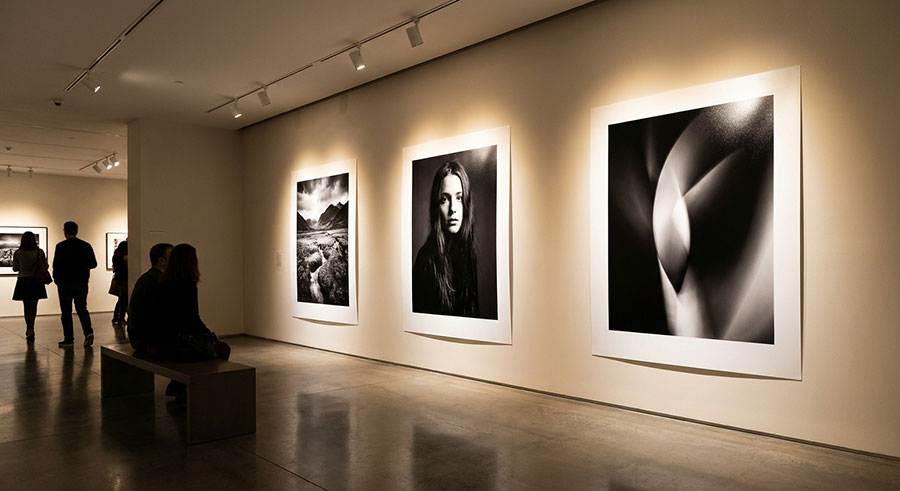
Whether you're printing in a traditional wet darkroom or running sheets through a modern inkjet printer, baryta paper connects you to a lineage of craft that stretches back more than 150 years. It is one of photography's quiet continuities, a layer of white mineral so thin you'd never notice it, yet responsible for some of the most beautiful images ever made. In a medium defined by light, baryta has always been there to make sure that light has the best possible place to land.
Related Posts and Information
Last updated: June 08, 2026


