A practical guide to choosing the right textured cotton paper for your art and photography
When you're deciding between two premium 100% cotton fine-art papers, the choice often comes down to a few key traits: surface texture, color tone, ink handling, and the overall feel you want your finished print to convey. Trinity River Velvet and Palo Duro Etching share the same museum-grade DNA archival cotton construction, OBA-free natural white tone, and matte coatings built for photography and artwork, but they excel in slightly different ways.
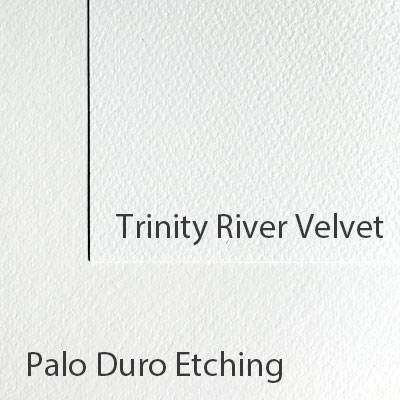
Palo Duro Etching leans into the classic fine-art look with a moderate, elegant texture that enhances an image without drawing attention to itself. It's warm-toned, subtle, and wonderfully versatile, particularly for portraits, nature scenes, black & white work, and art reproductions where nuance matters.
Trinity River Velvet, on the other hand, brings more presence to the surface. Its deeper, more pronounced cold-press texture adds dimension you can see and feel, making it especially appealing for watercolor reproductions or any print that benefits from a tactile, painterly character. Backing that texture is a latest-generation matte coating that delivers excellent color density and impressive deep blacks - a slight technical edge over Etching, but one we frame as refinement rather than replacement.
If you want texture that whispers, choose Palo Duro Etching.
If you want texture that speaks up, Trinity River Velvet is your paper.
FAQ: Trinity River Velvet vs. Palo Duro Etching
1. What is the main difference between Trinity River Velvet and Palo Duro Etching?
The biggest difference is texture. Trinity River Velvet features a deeper, more pronounced cold-press surface, while Palo Duro Etching offers a softer, more traditional fine-art texture. Both are 100% cotton, OBA-free, and museum-grade, but the surface feel creates noticeably different visual and tactile results.
2. Which paper has better print quality?
Both papers deliver exceptional color and detail, but Trinity River Velvet has a next-generation matte coating that provides slightly richer color density and deeper blacks. The advantage is subtle—Palo Duro Etching is already a top-tier performer—but artists who want maximum color pop may prefer Trinity.
3. Is Trinity River Velvet more textured than Palo Duro Etching?
Yes. Trinity River Velvet has a more pronounced cold-press texture designed for artwork that benefits from noticeable surface depth—watercolors, textured illustrations, mixed-media reproductions, and expressive fine-art prints. Palo Duro Etching's texture is more restrained and suits photography or artwork that needs refinement without distraction.
4. Are both papers truly archival and museum grade?
Yes. Trinity River Velvet and Palo Duro Etching are made from 100% cotton fiber, are acid-free, lignin-free, contain no optical brighteners, and meet the standards expected for museum-grade archival media. Both are designed for long-term display and conservation-minded printing.
5. Which paper is best for watercolor art reproduction?
Trinity River Velvet is the preferred choice thanks to its deeper cold-press texture that closely mimics traditional watercolor surfaces. If your artwork relies on visible texture, paper tooth, and a tactile presence, TRV enhances those qualities beautifully.
6. Does either paper work better with pigment or dye inks?
Both papers work exceptionally well with either pigment or dye inks. Trinity River Velvet's latest-generation coating provides slightly stronger color density with pigment inks, but the real-world difference is small; you'll get excellent results on both papers with any modern inkjet printer.
7. How do I choose between Palo Duro Etching and Trinity River Velvet?
Choose Palo Duro Etching if you want a refined texture, warm natural tone, and a classic fine-art look that complements photography and artwork alike.
Choose Trinity River Velvet if your work benefits from a strong tactile surface and slightly richer color depth. It's the standout choice for watercolor reproductions and textured illustrations.
Related Posts and Information
Last updated: November 13, 2025


