
When you hear the term cotton paper, sometimes called rag paper, you might picture something old-fashioned, even medieval. But cotton-based papers are alive and well today, trusted by artists, photographers, and printmakers who need surfaces that look beautiful and last for generations.
In this article, we'll explore where cotton paper comes from, how it's made, and why it matters for art, photography, and the environment.
What Is Cotton Paper?
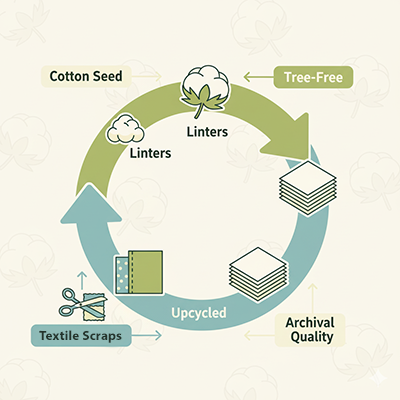
Cotton paper is made not from trees, but from the cotton plant. The fibers that form the paper come from two main sources:
- Cotton linters - the very short fibers left clinging to the cotton seed after ginning. They're too short to be spun into fabric but are nearly pure cellulose, making them ideal for papermaking.
- Cotton rags - the clean, pre-consumer cotton scraps left over when textiles are cut and sewn. Instead of being discarded, they can be repurposed into durable, high-quality paper.
Because cotton fibers are naturally long and pure, cotton paper is archival, strong, and resistant to yellowing, qualities that make it a favorite for fine art and professional printing.
From Cotton Plant to Paper Mill: The Supply Chain
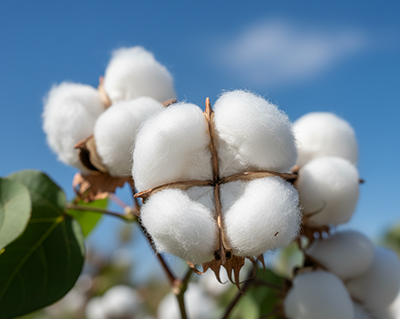
The journey of cotton paper starts in the cotton field. After harvesting, cotton is ginned, a process that separates the usable lint for textiles from the seeds. The leftover linters, which can't be used for fabric, are collected and sold as a raw material for papermaking.
Meanwhile, textile mills generate large amounts of pre-consumer cotton scraps. Think of the fabric cuttings left over when sewing jeans or shirts. These clean cotton pieces are also diverted to the paper industry.
By using these by-products, papermakers upcycle cotton waste into something long-lasting, instead of sending it to landfills.
Pulping: Turning Cotton Into Paper Fiber
At the paper mill, cotton linters and rags are broken down into pulp. Unlike wood pulp, which contains lignin (a component that causes paper to become brittle over time), cotton pulp is already nearly pure cellulose.
Here's how the process works:
- Cleaning & cooking - The raw cotton fibers are cooked in an alkaline solution, which removes waxes, pectins, and impurities.
- Washing - The fibers are thoroughly rinsed to leave behind only clean cellulose.
- Bleaching (optional) - To achieve a bright white base, some cotton pulp is bleached using chlorine-free methods, such as oxygen or hydrogen peroxide treatments.

The result is a pulp that is bright, strong, and perfectly suited for making fine art paper.
Sheet Formation: Handmade, Mould-Made, and Machine-Made
Once the pulp is ready, it's time to form it into sheets. The method of formation greatly influences the texture and character of the final paper.
- Handmade - Each sheet is crafted one at a time using a mould dipped into a vat of pulp. Handmade cotton paper often features deckle edges and a unique surface variation cherished by artists.
- Cylinder mould-made - A rotating cylinder slowly gathers pulp, creating paper with natural surface variation and a felt texture. This method balances efficiency with artisanal character, a trait common in fine art papers.
- Fourdrinier machine-made - a fast-moving belt creates uniform, consistent sheets. Many high-quality archival papers for printing are produced this way.
Finishing Touches: Sizing, Pressing, and Texture
After sheets are formed, they go through several steps to refine how they look and perform:
- Sizing - Cotton paper is treated to control absorbency. Without sizing, ink and paint would sink too quickly into the sheet. With sizing, colors stay crisp and edges sharp. Some papers are sized internally (in the pulp), others externally (dipped in a sizing bath), or both.
- Pressing and drying - Sheets are pressed between felts to remove water, then dried. The felts leave a subtle texture on the paper surface.
- Finishing -The paper can be left with a rough, toothy feel, or calendered (smoothed with rollers) for a softer surface.
This is how we get the familiar textures:
Hot Press: Smooth, great for detailed printing or pen work.
Hot Press examples from Red River Paper:
Aurora Art White 300
Aurora Art Natural 250
Cold Press : A medium texture, versatile for watercolor and mixed media.
Cold Press examples from Red River Paper:
Rough:
Pronounced tooth, ideal for expressive brushstrokes or textured prints.
Rough examples from Red River Paper;

Why Cotton Paper Lasts So Long
One of the biggest reasons professionals choose cotton paper is archival quality. Cotton fibers are naturally strong and free of lignin, which means they won't yellow or crumble the way acidic wood-pulp papers often do.
When made under alkaline, acid-free conditions, cotton paper can last for hundreds of years, which is why it's used for documents like banknotes, certificates, and museum-quality art prints.
Environmental Benefits (and Challenges)
Cotton paper has several environmental advantages:
Tree-free - It's made from by-products of the cotton and textile industries, not from logging.
Upcycling - It diverts cotton scraps and linters from waste streams.
Long-lasting - Its archival durability means prints and documents don't need to be reprinted, saving resources in the long term.
That said, there are challenges too:
Cotton farming can be water- and chemical-intensive, depending on the region.
Pulping and bleaching require careful chemical management, though most mills today use chlorine-free processes.
Overall, when sourced responsibly, cotton paper remains one of the most sustainable and durable choices for fine art and photo printing.
Why Cotton Paper Matters for Artists and Photographers
For creatives, the paper you choose is just as important as the ink, paint, or image. Cotton paper offers:
- Rich texture that enhances both artwork and printed photographs.
- Superior durability, so prints and paintings can be enjoyed for generations.
- Archival quality, meeting museum and collector standards.
- Variety of surfaces from smooth for detail, textured for expression.
Whether you're printing a fine art photograph, painting with watercolors, or producing an heirloom certificate, cotton paper provides a foundation of strength and beauty.
Final Thoughts

From cotton fields to paper mills, cotton paper is a story of transformation, taking what was once waste and turning it into something that lasts for centuries.
At Red River Paper, we're passionate about helping photographers, artists, and printmakers find the right paper for their work. By understanding the process behind cotton paper, you can better appreciate why it feels different in your hands, why it performs so well, and why it's trusted worldwide for fine art and archival use.
Related Posts and Information
Last updated: February 12, 2026


