Three Ways To Save Money –A Lot Of It– On Inks For Your Printer
-1_copy_1775014436.png)
By ARTHUR H. BLEICH
Three ways to save a huge amount of money on expensive printer inks without affecting the quality of your printed images are: 1. Purchasing alternative inks from after-market suppliers, 2. Keeping your printer on at all times, and, 3. Choosing the right quality setting at which to print your images. Let's take a closer look at each of them.
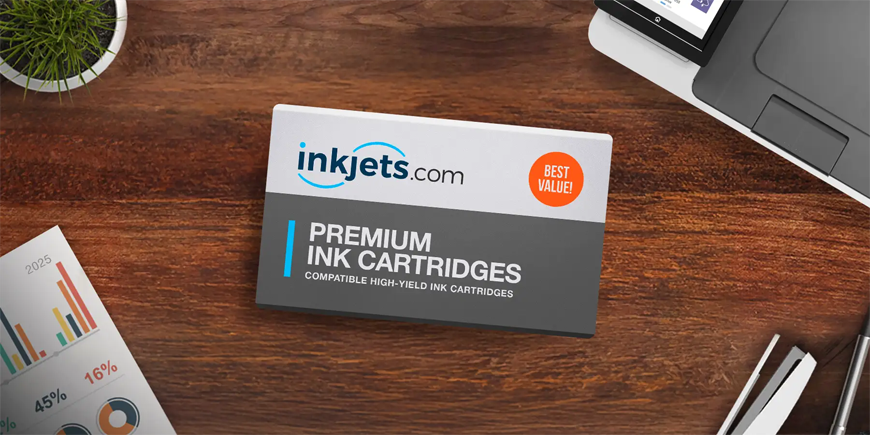
Alternative inks are also called Compatible, Replacement, Comparable, or Third-Party, ( a legally derived term in which the first party is the manufacturer, the second party the customer and the third party any outside vendor). Whatever you call them, alternative ink supply companies claim their inks are equal in quality to manufacturers’ inks, cost a great deal less, and can save you 50% to 80%. Depending on how many pages and/or images you print, this could add up to hundreds (or even thousands) of dollars a year.
According to a Consumer Reports review, branded printer ink can cost between $13 and $75 per ounce— more than human blood and many other expensive liquids. Compared to $4.00 for a gallon (128 ounces) of gasoline, the same amount of brand-name printer ink can cost between $1,664 to $9,600 if purchased in OEM (Original Equipment Manufacturer) cartridges.
Why the high price of ink? Printer manufacturers’ business models are nearly identical to that of the Gillette Corporation, developer of the safety razor in in the early 1900s which sold the the razors cheap and reaped huge profits on the sales of throw-away blades. Printer manufacturers claim that if they relied on profits from printer sales alone, printer prices would have to skyrocket.
Using Alternative Inks Will NOT Void Your Printer’s Warranty
When compatible inks were first offered for use with inkjet printers, manufacturers warned that your printer warranty could be voided unless you used only their OEM inks, but this argument was rejected by the courts as a violation of the Magnuson-Moss Warranty Improvement Act which said that that consumers could not be forced to use specific brands to maintain warranty on their purchases. So unless a printer manufacturer can prove that an alternative ink destroyed a mechanical part of their product, they cannot void warranties.
Do Alternative Inks Really Save That Much?
If you do a lot of printing on a desktop in inkjet printer, your ink costs can average several hundred dollars a year or more. If you use a more sophisticated wide carriage printer with more than six colors, your yearly ink costs could soar to a thousand dollars or more. If you want to reduce those costs considerably, keep an open mind as we look at the pros and cons of using alternative inks for your printer. Later on I’ll discuss two methods that will cut down on ink usage even if you decide not to try alternative inks.
Choose A Reputable Alternative Ink Supplier
As with any product or service, there are good and not-so-good ones, so it’s important to choose a reliable supplier of inks. After reading hundreds of customer reviews of alternative ink suppliers, I found several that have established themselves and appear to be good choices for you to investigate (see Resources below). Most suppliers offer free shipping if you purchase more than $50 worth of inks, and a low, fixed shipping price of just a few dollars if you spend less than that amount.
What To Know About Alternative Inks:
1. Remanufactured vs. Compatible: "Compatible" cartridges are brand new but made by a third party, while "Remanufactured" ones are recycled OEM shells refilled with high-quality ink. Both are generally reliable if sourced from reputable vendors.
2. Some printer manufacturers have tried to use various methods to try to block third-party cartridges from being recognized. In the unlikely event that this should happen, there are scores of sites on the web that offer work-arounds. Or you can contact tech support at your alternative ink supplier for a solution applicable your specific printer model.
3. Don’t buy by price alone. The cheapest inks can sometimes result in lower page yields or inconsistent quality.
4. While you can buy bottled inks in bulk and refill your own cartridges I don’t recommend it if this is your first encounter with alternative inks. It can be a challenge and messy and the savings are not going to be that much more over pre-filled cartridges. But bottled inks, however, are fine for printers that use them such as all-in-ones.
Conserving Ink When Printing
If you think all the ink you use ends up on the printed page, think again. In extensive testing, Consumer Reports found consumers are getting only about half of the ink they think they’re paying for. Many printers they tested consumed a significant amount of ink each time they were turned on by going though heavy cleaning cycles that use more ink than is normally used during periodic maintenance cycles that are usually performed from time to time even when the printer is idle.
Keeping Your Printer On All The Time
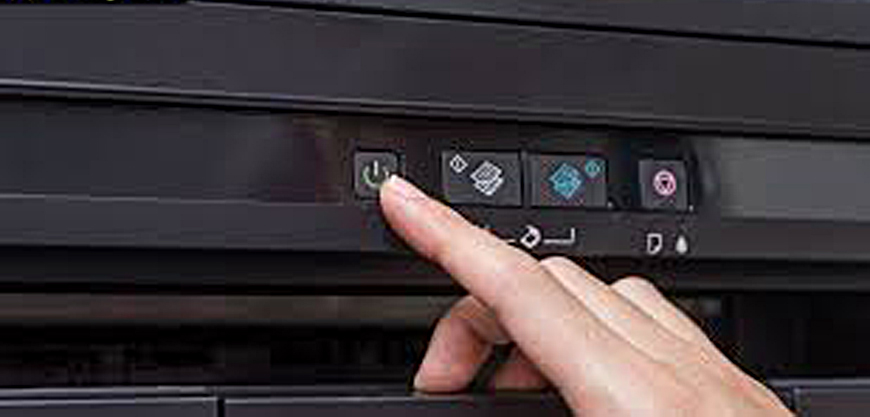
If you only print every few weeks, then having your printer go through complete start-up cycle may be required. But if you print at least once a week, try this: leave your he printer on at all times (which will only consume a few watts of power). Then, before printing use a sheet of plain paper to run a nozzle check, which consumes only a minuscule amount of ink. If the pattern looks good, you're set to go and you’ve saved a lot of ink that would have been used for the printer’s full start-up routine.
Choosing The Right Output Quality
Here’s another way to save ink. Your printer usually offers four (or more) output quality options such as Draft, Normal, High Quality, and Ultra High Quality. They many not be named exactly the same as those I’ve used, but they indicate the quantity of ink the printer will squirt onto the paper.
The lower the setting, the less ink the printer will use and the faster the printing time will be. Higher quality settings will use more ink requiring slower printing times. In many instances the difference between an image printed at High Quality compared to one printed at Ultra High Quality may not be able to be detected by the human eye. i But the slow printing speed at the highest quality setting gives you a clue as to how much more ink is being used; it could be up to twice as much.
Summing It Up
1. If you buy alternative inks from a reputable supplier you’ll save a considerable amount of money without compromising on image quality.
2. Keep your printer on all the times.
3. Choose the next-to-highest quality setting when outputting your prints.
Did You Know That...
Over 375 million empty printer cartridges are thrown away annually in the U.S. and accumulate at a rate of 1 million per day in landfills They can take up to 1,000 years to decompose.
RESOURCES:
Here are some recommended companies that sell alternative inks. For more, Google: Best Third Party Inks.
- LD Products: they have over 25 years of experience.
- Inkjets.com: Known for high-yield cartridges.
- E-Z Ink: A popular choice on major marketplaces like Amazon.
- Ink.com: Specializes in deep discounts (up to 85% off).
- CompAndSave: For high-volume users and small business.
Original Publication Date: April 04, 2026
Article Last updated: April 04, 2026
Related Posts and Information
Categories
About Photographers
Announcements
Back to Basics
Books and Videos
Cards and Calendars
Commentary
Contests
Displaying Images
Editing for Print
Events
Favorite Photo Locations
Featured Software
Free Stuff
Handy Hardware
How-To-Do-It
Imaging
Inks and Papers
Marketing Images
Monitors
Odds and Ends
Photo Gear and Services
Photo History
Photography
Printer Reviews
Printing
Printing Project Ideas
Red River Paper
Red River Paper Pro
RRP Products
Scanners and Scanning
Success on Paper
Techniques
Techniques
Tips and Tricks
Webinars
Words from the Web
Workshops and Exhibits
all
Archives
March, 2026
February, 2026
January, 2026
November, 2025
October, 2025
September, 2025
August, 2025
July, 2025
June, 2025
more archive dates
archive article list


Red River Paper Inc. All contents © 1997 - 2026. 8330 Directors Row. Dallas Texas, 75247. Prices, specifications, and images are subject to change without notice. Not responsible for typographical or illustrative errors. Website Terms & Conditions | Acceptable Use
Site Development & Maintenance: Phosphor Media, LLC