Photo Manipulation: Fakery or Art?
By ARTHUR H. BLEICH
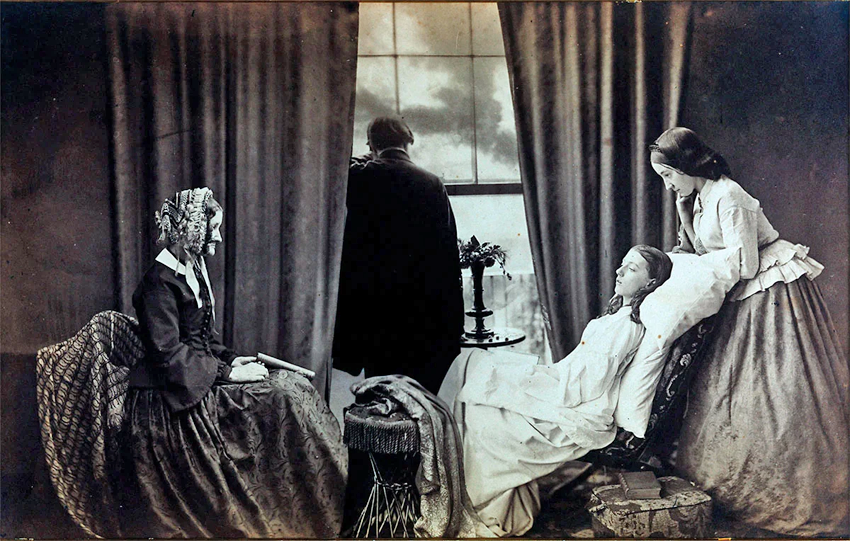
The 1858 photograph (above) by Henry Peach Robinson is titled Fading Away. It depicts three family members tending to a young woman on her deathbed. When it was exhibited, Some viewers were upset at the camera’s intrusion at such a sorrowful time. But more serious controversy about the photograph was brewing.
Critics pointed out that Fading Away was composed of five images photographed at different times before being combined into one print. They claimed the scene staged to mislead viewers into thinking it was legitimate.
Robinson vigorously rebutted them, pointing out that the individual images he used were no different than artists’ sketches from which final paintings were produced. Queen Victoria was so enthralled with the photo that she purchased it a few years later, giving Robinson’s technique the royal stamp of approval and he eventually became acclaimed for many other combination images he produced during his lifetime.
EARLY PHOTOGRAPHERS WERE INNOVATIVE
Some early photographers argued that just because the camera could capture the intricate details of reality, its use wasn’t restricted to that purpose only. And so they began to come up with ingenious ways to expand the vision of their new, magic box.
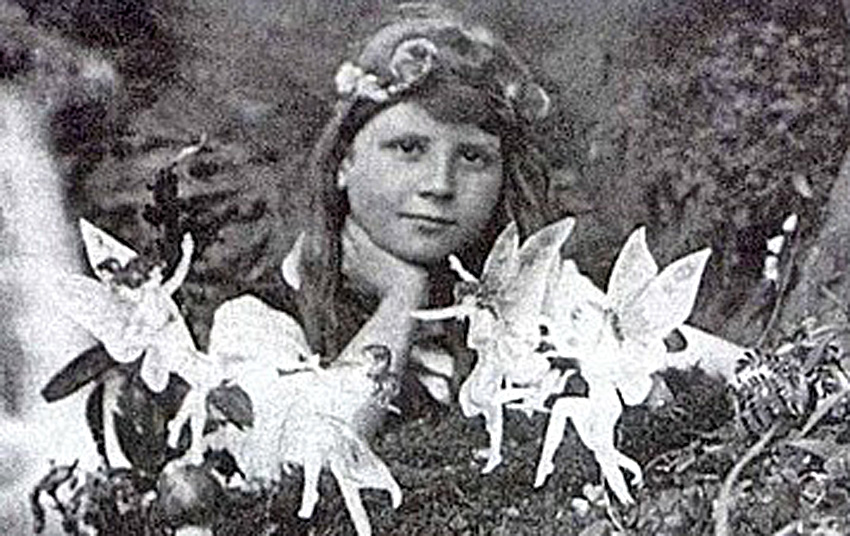
“Spirit” photos depicted departed loved ones hovering near the living, and fairies were “photographed” dancing in the woods. Clouds were added to bald skies and war scenes were altered. The Loch Ness Monster photo was considered real for more than 60 years before its makers fessed up. Many of these alterations were accepted as truthful by people who believed that “the camera never lies.”
DIGITAL PHOTO ALTERATION ARRIVES
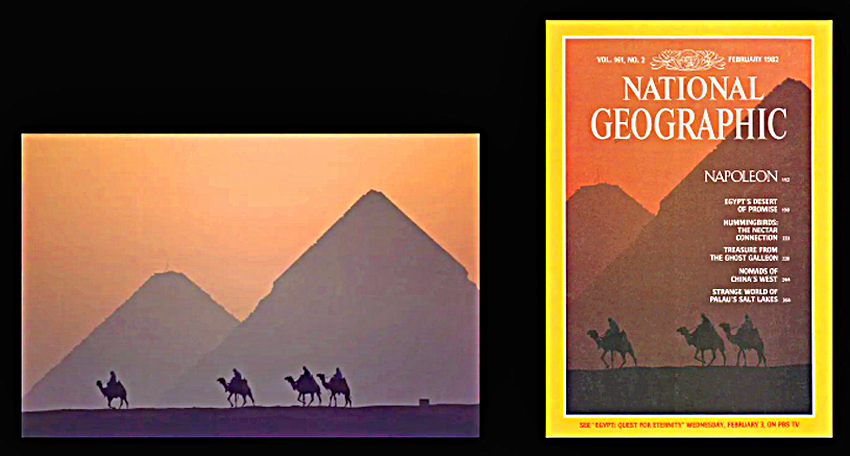
In 1982, eight years before Photoshop debuted, National Geographic magazine digitally altered an image of Egypt’s Pyramids of Giza– making them appear closer together to fit the vertical format of their magazine cover. When disclosed, it created an uproar. However, what was lost in the accusations of digital chicanery was that the original photograph wasn’t very authentic either. The photographer had hired a several camel drivers (who would not normally be there) to appear in the image.
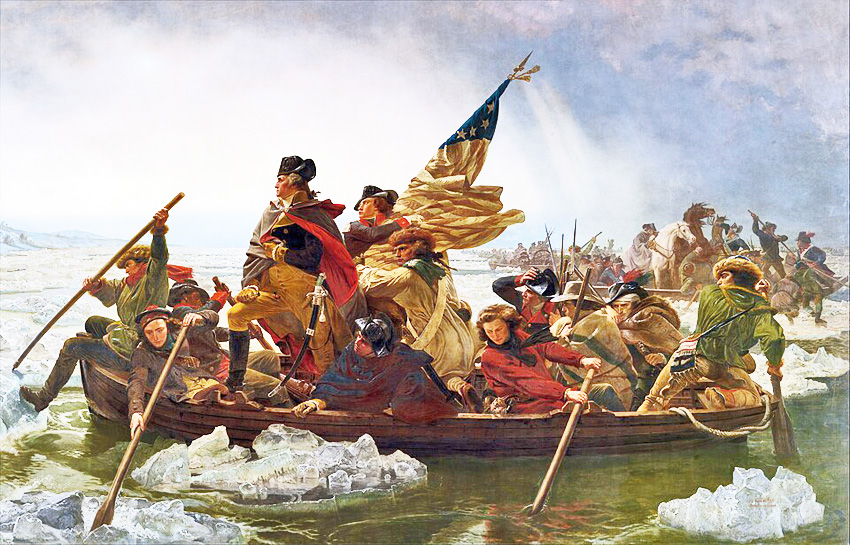
Painters have always altered visual elements of historic (and other) scenes to make them more compositionally pleasing and dramatic. George Washington would not have been standing in the bow of an open boat that was in choppy, icy water when he and his troops crossed the Delaware River headed for the battle of Trenton, New Jersey. Furthermore, the river crossing occurred close to midnight and the flag that was flying did not yet exist.
ON TO THE CIVIL WAR
Some Civil War photographers routinely altered photos. Take, for example, the 1864 image of General Ulysses S. Grant at City Point, Virginia. Three photos were used to assemble it.
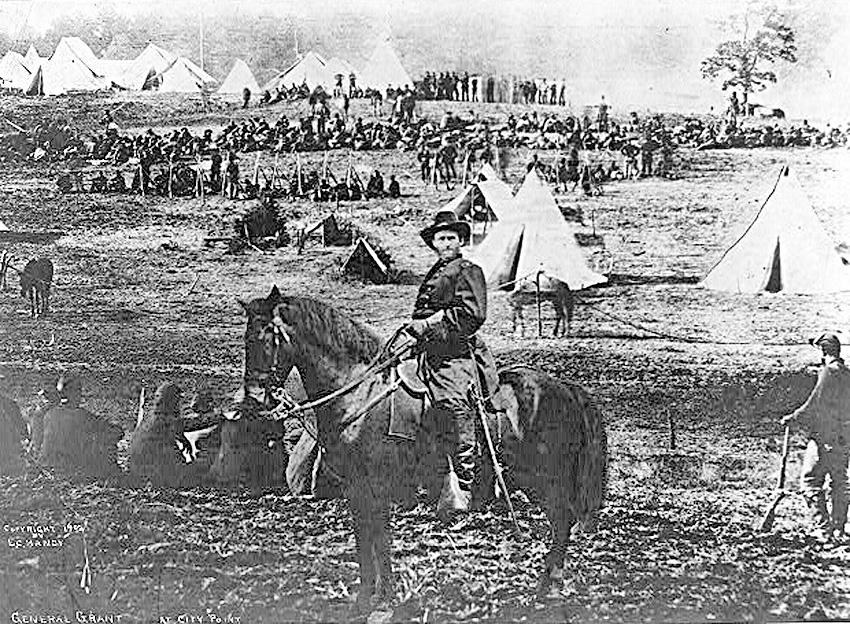
Grant’s head came from another photo of him taken on an earlier date at his Cold Harbor, Virginia Headquarters. The horse and rider’s body were those of Maj. Gen. Alexander McDowell McCook, and the background shows Confederate prisoners, part of a photo captured previously at the battle of Fisher's Hill.
ARE PHOTO IMAGES ACCURATE?
Photography allows the photographer to capture images, but are those Images really accurate representations of reality? The answer is: Usually not. By selecting lenses of different focal lengths and choosing various shutter speeds, captured images are rarely “true”. Add to that post-processing manipulations (past and present) and photographers were (and are now able) to put their own creative imprint on their works.
When you think about it, there are certain kinds of photos that would be impossible to make were it not for contemporary software. These include, high dynamic range images, digital focus shifting, image sharpening and a myriad of other techniques that we love, use, and accept without question.
DIFFERENT TYPES OF IMAGE ALTERATIONS
Image alterations generally fall into four categories, some of which overlap:
1. Amusing (and harmless). Photos of ghosts, fairies, monsters, folk lore characters, and so on. The fairies image (above) is one of these.
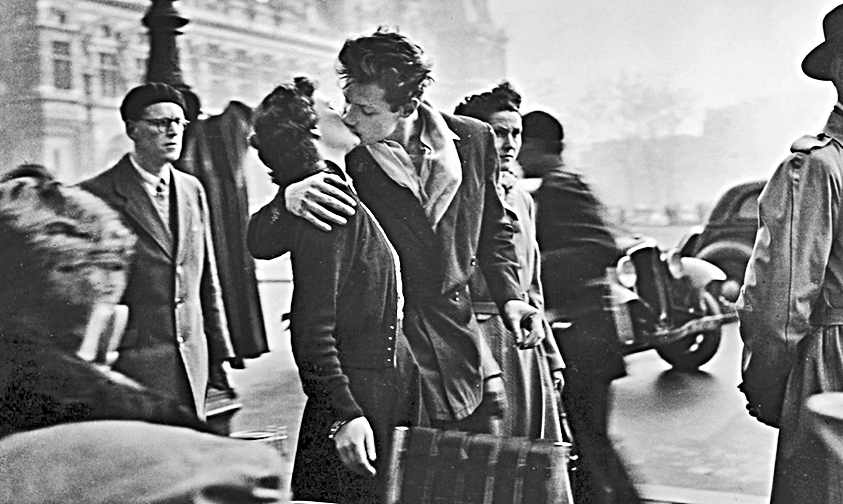
2. Staged (during shooting or post production). Subjects and/or objects moved, removed or added. The National Geographic Pyramids of Giza image (above) is an example, as is the image of lovers kissing in Paris (below) which was staged with two professional models.
3. Deceptive. General Grant’s image is a good example of this (above).
4. Malicious or hurtful. Images intentionally created to cause harm, pain or distress.
WHAT ABOUT ARTISTIC LICENSE?
The philosophy of the art world can be summed up in two words: “Anything Goes”. This is more usually referred to as Artistic License and has historically been defined is the freedom granted to writers, painters, filmmakers, and creators to bend or break rules—such as factual accuracy, grammar, logic, or timeline constraints—in order to improve the impact, beauty, or flow of their work. Of course not everyone agrees on the extent to which these rules can be broken and that’s how controversy arises.
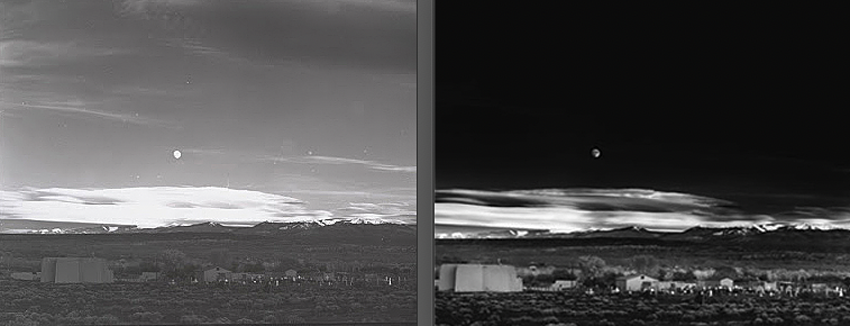
Ansel Adams was fond of saying that “the negative is similar to a musician's score, and the print to the performance of that score. The negative comes to life only when performed' as a print.” He had no problem removing unwanted clouds and “burning in” an overly- light sky in his classic image Moonrise Over Hernandez.” (below).
More than a hundred different styles of art have evolved since early cave paintings and many of them were not warmly welcomed by artists working in more traditional styles. But they were appreciated by the public and so, in time, become mainstream, which brings us to the following conclusion.
IT’S REALLY UP TO YOU
Only you can decide how much to alter your images, but I suggest you avoid those that are nefarious or hurtful because they may raise valid ethical (and even legal) objections.
But to grow as a photographer, there’s never been a better time to experiment with both analogue and digital processes that will enable you to create imagery that expresses your unique point of view.
RESOURCES:
National Gallery of Canada More images of Henry Peach Robinson and how he made them.
.
Original Publication Date: October 31, 2026
Article Last updated: October 31, 2026
Related Posts and Information
Categories
About Photographers
Announcements
Back to Basics
Books and Videos
Cards and Calendars
Commentary
Contests
Displaying Images
Editing for Print
Events
Favorite Photo Locations
Featured Software
Free Stuff
Handy Hardware
How-To-Do-It
Imaging
Inks and Papers
Marketing Images
Monitors
Odds and Ends
Photo Gear and Services
Photo History
Photography
Printer Reviews
Printing
Printing Project Ideas
Red River Paper
Red River Paper Pro
RRP Products
Scanners and Scanning
Success on Paper
Techniques
Techniques
Tips and Tricks
Webinars
Words from the Web
Workshops and Exhibits
all
Archives
September, 2026
August, 2026
July, 2026
June, 2026
May, 2026
April, 2026
March, 2026
February, 2026
January, 2026
more archive dates
archive article list


Red River Paper Inc. All contents © 1997 - 2026. 8900 Ambassador Row, Dallas Texas, 75247. Prices, specifications, and images are subject to change without notice. Not responsible for typographical or illustrative errors. Website Terms & Conditions | Acceptable Use
Site Development & Maintenance: Phosphor Media, LLC