How To Capture Amazing Night Sky Images
By ARTHUR H. BLEICH
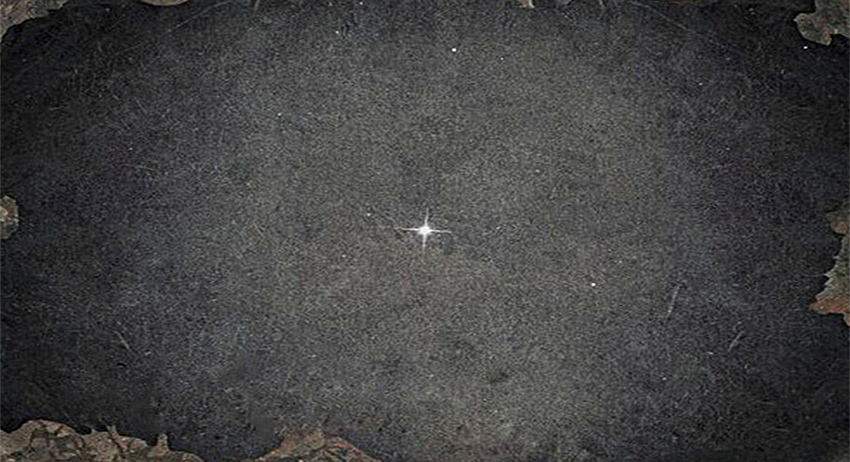
Harvard Observatory, Cambridge, Mass, 1850. On a warm, July night astronomer William Bond and photographer John Adams collaborate in an attempt to capture a photograph of Vega, a bright star in the Lyra constellation.
As Bond scans the sky to locate their quarry, Adams goes through the laborious process of sensitizing a chemically treated metal plate, which is then positioned at the viewing end of the telescope. After 20 minutes, the plate is removed, treated with other chemicals and reveals the first known photographic image of a star. (See image above.) Astrophotography is born!
IT’S NOT COMPLICATED
Serious astrophotography usually involves probing into deep space with expensive high-powered telescopes that have cameras and other sophisticated equipment attached to them. But there’s an easier and less expensive alternative called Night Sky Photography requiring only simple equipment, most of which you probably already own.
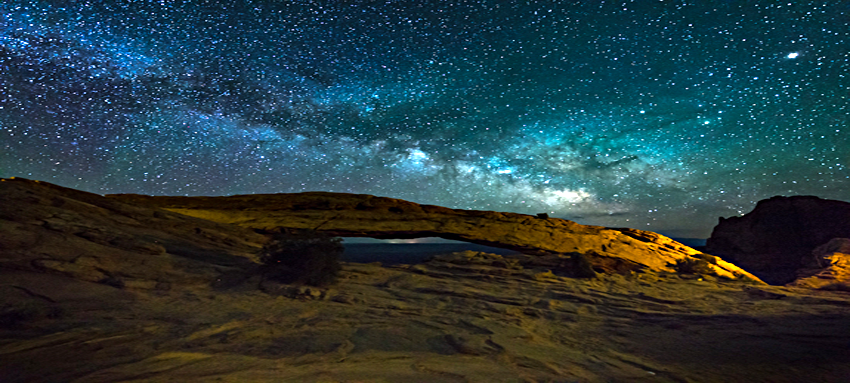
Night sky images include subjects on earth to complement the starlight and together they produce stunning, star-studded photographs. (See image above.) If you currently have or can obtain the equipment listed below, that’s all you’ll need. To learn how to capture these spectacular images, you can read how to do it in a 3-Part series that night sky photographer Ron Risman wrote exclusively for the Red River Paper Blog (see Resources below).
GETTING STARTED
In Part 1 of Risman’s blog post he covers what equipment is needed and why.
1. A DSLR or Mirrorless camera.
2. A 24mm (or wider) lens for a full-frame camera or its equivalent, depending on the size of your camera sensor, with a maximum aperture of F/2.8 or faster. If you have a zoom lens on your camera just set to its widest field of view.
3. A stable Aluminum or Carbon Fiber tripod. Since night sky photography requires longer exposure times than usual, you cannot handhold the camera.
4. An optional wired or wireless remote shutter release to avoid camera shake when pressing your finger on the shutter button. You may also be able to use the camera’s built-in self timer to trip the shutter.
Risman also explains how to find light-pollution-free locations for night sky photography. There are also descriptions of the best times to shoot, settings and exposure values, an explanation of astronomical dusk and dawn, and how to find the Milky Way, (a location that a billion stars and 100 million planets call home).
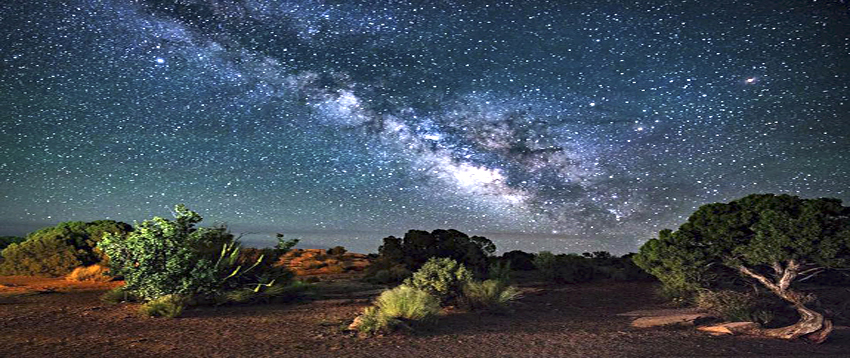
Part 2 covers lens apertures, shutter speed duration and focus considerations along with an excellent pre-shot checklist that practically guarantees you’ll get stunning results, even on your first try. Risman discusses ISO Sensitivity and has an excellent section on noise reduction and white balance settings. Finally, he describes how to easily add some light to the foreground to balance your composition and show the beauty of the location you’re shooting in. (See image above.) This technique also reduces noise levels by adding a small amount of light to the shadow areas of your image.
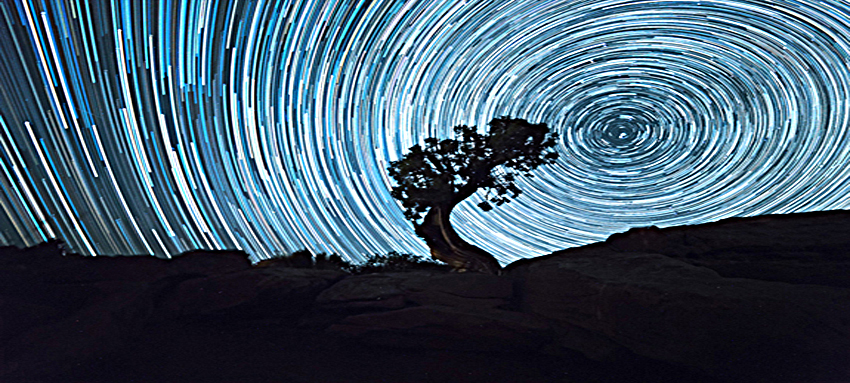
Moving on to Part 3, Risman begins by saying “As good as your image may look straight out of the camera, it’s really not finished yet.” He then demonstrates his post-production techniques that make his images really outstanding. Finally, just when you think it’s ended, he finishes with a grand finale on how to capture star trails, along with some extraordinary examples. See image below/) He explains the difference between single-timed exposures vs. interval exposures and tells you how to set up your star trail shot, execute it and then post- process it.
MORE ABOUT THE STARS
You are not alone if you find either solace or foreboding when viewing the starlit heavens at night. Throughout history the stars have played a role in the development of civilizations and, in addition, many religions incorporate celestial lore into their theology. The fate of many battles and major historical events have been undertaken based on the alignment of the stars and these heavenly bodies have also inspired writers and artists from the beginning of time.
When shooting the night sky, many photographers have said that they are overcome with an almost mystical, soul-soothing feeling that provides them with a new perspective about their place in the universe. That alone, may be a good reason for you to try it.
RESOURCES:
Shooting The Stars by Ron Risman:
Part 1: The Night Sky
Part 2: Techniques
Part 3: Post Production
Original Publication Date: June 04, 2026
Article Last updated: June 04, 2026
Related Posts and Information
Categories
About Photographers
Announcements
Back to Basics
Books and Videos
Cards and Calendars
Commentary
Contests
Displaying Images
Editing for Print
Events
Favorite Photo Locations
Featured Software
Free Stuff
Handy Hardware
How-To-Do-It
Imaging
Inks and Papers
Marketing Images
Monitors
Odds and Ends
Photo Gear and Services
Photo History
Photography
Printer Reviews
Printing
Printing Project Ideas
Red River Paper
Red River Paper Pro
RRP Products
Scanners and Scanning
Success on Paper
Techniques
Techniques
Tips and Tricks
Webinars
Words from the Web
Workshops and Exhibits
all
Archives
September, 2026
August, 2026
July, 2026
June, 2026
May, 2026
April, 2026
March, 2026
February, 2026
January, 2026
more archive dates
archive article list


Red River Paper Inc. All contents © 1997 - 2026. 8900 Ambassador Row, Dallas Texas, 75247. Prices, specifications, and images are subject to change without notice. Not responsible for typographical or illustrative errors. Website Terms & Conditions | Acceptable Use
Site Development & Maintenance: Phosphor Media, LLC